
Act fast on a roof leak. Protect people first, contain the water, photograph the damage, and call a commercial roofer. Stay off the roof yourself.
A roof leak rarely stays small. Water follows decking, insulation, and seams, so the drip you see often sits far from the opening. Every hour adds damage to inventory, ceilings, and electrical systems. This guide gives facility managers and building owners a clear plan for the first 24 hours.
Hour 0 to 1: Protect People and Power
Safety comes first. Water near light fixtures, outlets, or electrical panels creates a shock risk. Shut off power to the affected area if you can do it safely. Then clear people from wet floors and sagging ceiling tiles. A bulging ceiling can hold a surprising amount of water and may fall without warning.
Hour 1 to 3: Contain the Water
Move inventory, equipment, and records out of the drip zone. Cover anything you cannot move with plastic sheeting. Set buckets under active drips and empty them often. Wet floors invite slips, so mop or vacuum standing water. Tell your property manager or landlord right away if you lease the space.
Hour 3 to 6: Document the Damage
Photos and video protect your claim. Capture wide shots and close-ups of ceiling stains, wet equipment, and damaged inventory. Photograph the roof from the ground if you can see damage. Note the date, time, and weather when the leak started. Keep every receipt for cleanup and temporary measures. Insurers often ask for these details, and Triple-I advises policyholders to save receipts for reimbursement.
Hour 6 to 12: Call Your Insurer and a Commercial Roofer
Call your insurance carrier as soon as possible. Ask what your policy requires before any repairs begin. Then call a commercial roofer with 24/7 emergency response. Give the roofer the leak location, the roof type, and any recent storm activity. Ask how fast a crew can reach your site.
Hour 12 to 24: Stop the Water at the Roof
A qualified crew can tarp or patch the opening to stop water entry. Temporary repairs buy time, but they do not fix the cause. Expect a full inspection that finds the source, checks for wet insulation, and tests drains and flashing. Wet insulation traps moisture and keeps the leak alive long after the rain stops. Your roofer should explain what they found and which repairs come next.
What Not to Do
Never climb onto a wet roof. OSHA requires fall protection at six feet in the construction industry, and wet membranes are slick. Skip the hardware-store sealant, because it hides the problem and unapproved repairs may affect your warranty. Do not wait on small leaks either. Small leaks often signal larger failures under the surface.
Common Causes of Commercial Roof Leaks
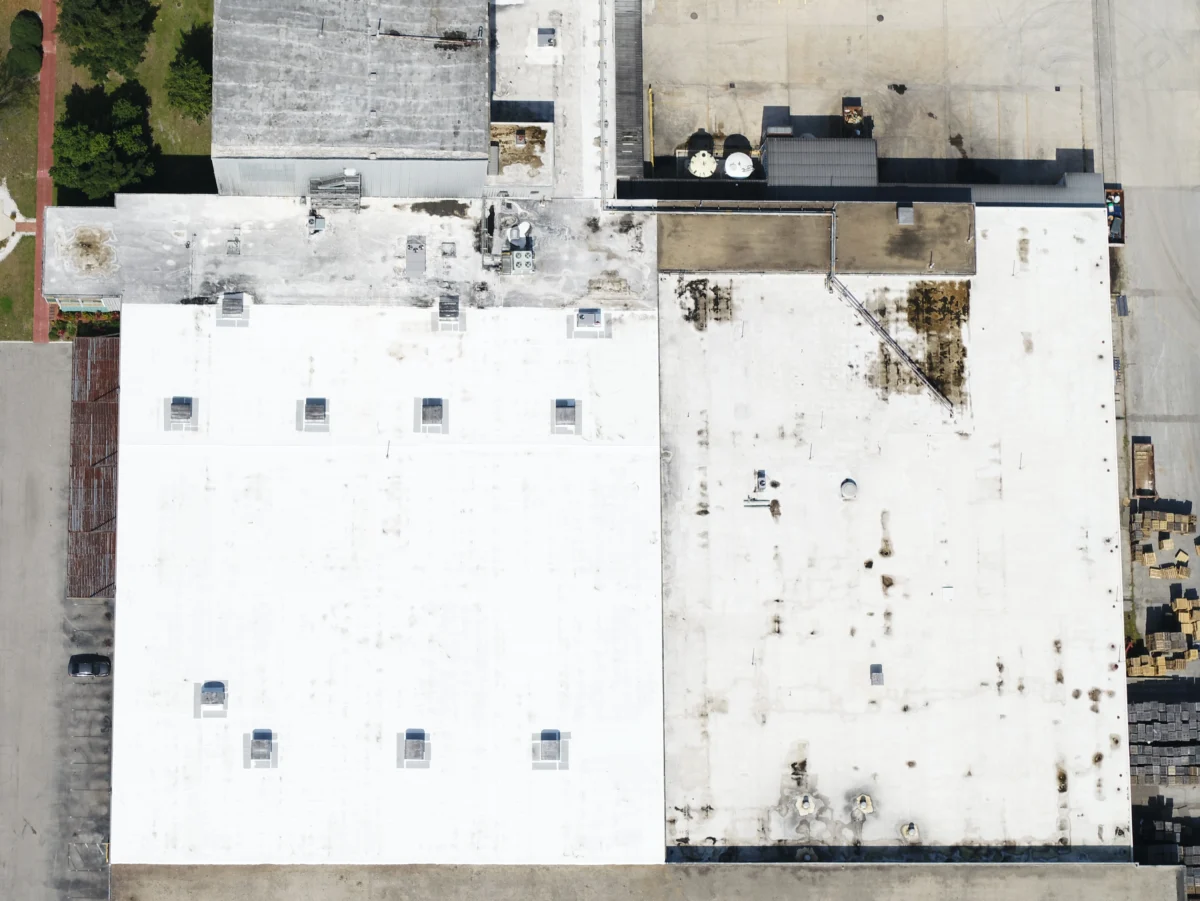
Most commercial leaks trace back to a handful of causes. Failed flashing around penetrations and edges is a frequent culprit. Split seams, membrane punctures, and clogged drains also cause leaks. Ponding water stresses flat roofs and speeds up wear. A roofer can match the cause to the right repair.
How to Prevent the Next Leak
Regular inspections catch small problems early. A StarCare™ maintenance plan from North American Roofing keeps your roof on a regular inspection and maintenance schedule. Inspect your roof after every major storm, too.
Need Help With a Leak Right Now?
Call our 24/7 emergency line at (866) 567-2064 for active leaks. North American Roofing has served commercial and industrial buildings since 1979 and works in 49 states. Planning a longer-term fix or a full replacement? Request a quote and our team will respond.
FAQ Section
Should I call my insurer or a roofer first?
Call both within the first few hours. Your roofer can stop further damage while your insurer opens the claim. Ask your insurer what your policy requires before permanent repairs begin.
Can I fix a commercial roof leak myself?
No. Roof access carries a fall risk, and the visible drip rarely marks the true source. A qualified roofer can find the opening and repair it to manufacturer standards.
How long can a roof leak wait?
Not long. Wet insulation and decking keep damaging the building after the rain ends. Mold can begin growing on wet materials within 24 to 48 hours.
What should I photograph after a roof leak?
Capture ceiling stains, wet equipment, damaged inventory, and standing water. Add roof photos from the ground when damage is visible. Record the date and time for each file.
Does a temporary repair fix the leak?
No. A tarp or patch stops water for a short time. A permanent repair addresses the root cause.
Does North American Roofing offer emergency roof services?
Yes. Call (866) 567-2064 any time for emergency roof services. We work on commercial and industrial roofs only.