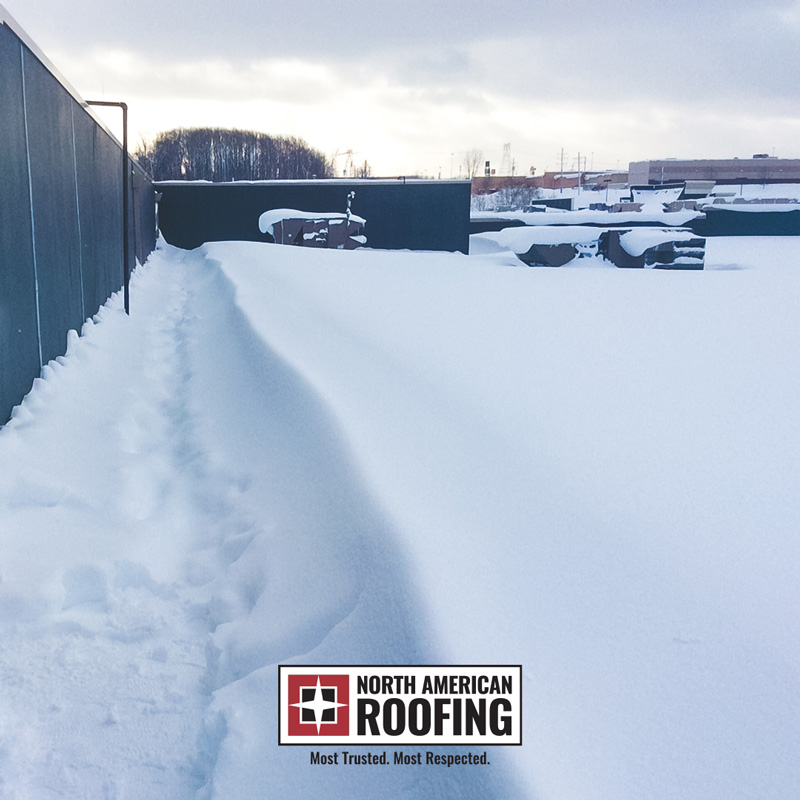
When winter storms hit, snow on a commercial roof can look harmless at first—quiet, white, and unmoving. But beneath that calm surface, snow accumulation can quickly turn into a structural and financial risk. One of the most common questions commercial building owners and facility managers ask is simple and urgent:
How much snow is too much for a commercial roof?
The answer depends on several factors, and misunderstanding them can lead to roof damage, leaks, or even structural failure. Let’s break it down.
Snow Load vs. What You See on the Roof
Snow isn’t just “snow.” What matters is snow load, which is the weight snow places on a roof structure. Snow load is typically measured in pounds per square foot (PSF).
As a general reference:
- Light, dry snow can weigh 5–10 PSF
- Wet, heavy snow can weigh 20–30 PSF or more
- Compacted snow and ice can exceed 40 PSF
Most commercial roofs are designed to handle a specific load, but that design assumes ideal conditions—not repeated storms, drifting, blocked drains, or freeze–thaw cycles.
In other words, your roof might technically be “rated” for snow, but that doesn’t mean it’s safe under real-world conditions.
Why Flat Commercial Roofs Are at Higher Risk
Flat and low-slope commercial roofs are especially vulnerable during winter weather.
Here’s why:
- Snow doesn’t slide off like it does on steep residential roofs
- Wind creates uneven drifting, piling snow against parapet walls, HVAC units, and roof edges
- Drains and scuppers can become blocked by ice, trapping water as snow melts
- Melted snow can refreeze overnight, creating dense ice loads
These conditions cause localized stress, which is far more dangerous than evenly distributed snow. Many roof failures happen not because of total snow depth, but because of concentrated weight in specific areas.
Warning Signs Your Commercial Roof May Be in Danger
You don’t need to wait for visible damage to know there’s a problem. Common warning signs include:
- Large snow drifts along roof edges or behind rooftop equipment
- Standing water that doesn’t drain after temperatures rise
- Interior ceiling stains or new leaks
- Unusual creaking, popping, or structural noises
- Doors or windows becoming difficult to open (a sign of building movement)
If any of these appear, it’s time to act—not observe.
When Does Snow Become a Structural Emergency?
There is no universal “safe” snow depth, but many industry professionals recommend evaluating roof snow removal when:
- Snow accumulation exceeds 6–12 inches, depending on snow type
- Multiple storms occur before previous snow has melted
- Temperatures fluctuate above and below freezing
- Your building has a history of drainage or structural issues
Waiting too long increases the risk of sudden failure, especially during thawing periods when snow becomes saturated and dramatically heavier.
The Hidden Risk: Ice and Freeze–Thaw Cycles
Ironically, snow itself is often less dangerous than what happens after it starts to melt.
Freeze–thaw cycles can:
- Force water into seams, penetrations, and membrane laps
- Expand small cracks into major leaks
- Damage flashing, coping, and roof edges
- Lead to interior water damage days or weeks later
This is why proactive roof snow removal is often less expensive than emergency leak repairs or structural remediation.
Why DIY Snow Removal Is a Bad Idea
It may be tempting to send maintenance staff onto the roof with shovels, but improper snow removal can cause serious damage.
Common DIY mistakes include:
- Using metal tools that puncture roof membranes
- Removing snow unevenly, increasing stress
- Damaging flashing, drains, or rooftop equipment
- Voiding manufacturer warranties
Professional roof snow removal contractors understand load distribution, membrane protection, and safe access methods—protecting both your roof and your liability exposure. Call (800) 551-5602
Snow Removal as Preventive Maintenance
Smart commercial building owners treat snow removal as part of a broader preventive maintenance strategy.
Planned snow response:
- Reduces emergency service calls
- Protects roof warranties
- Extends roof lifespan
- Minimizes interior damage and business disruption
- Provides documentation for insurance and compliance
In short, it’s far less costly to remove snow before it becomes dangerous than to repair the aftermath.
When to Call a Professional
If you’re unsure whether your roof is at risk, that uncertainty alone is reason enough to call a professional. A qualified commercial roofing contractor can assess snow load, identify high-risk areas, and determine whether immediate roof snow removal is necessary.
Winter doesn’t give warnings—it gives invoices. The safest move is to stay ahead of the weight before it pushes your roof past its limits.
Frequently Asked Questions About Commercial Roof Snow Removal
How much snow is too much on a commercial roof?
There is no single safe depth for all buildings, but many commercial roofs should be evaluated once snow accumulation reaches 6–12 inches. Wet, heavy snow and ice can become dangerous much faster, especially on flat or low-slope roofs where snow does not slide off naturally.
How much weight can a commercial roof handle?
Commercial roofs are designed for specific snow load ratings, measured in pounds per square foot (PSF). Light snow may weigh as little as 5 PSF, while wet snow and ice can exceed 30–40 PSF. Uneven loading from drifting or blocked drains can exceed design limits even when overall snow depth appears manageable.
Are flat commercial roofs more vulnerable to snow damage?
Yes. Flat and low-slope commercial roofs are more susceptible to snow accumulation, drifting, and ice buildup. Snow tends to collect around parapet walls, HVAC units, and roof penetrations, creating localized stress that increases the risk of leaks or structural damage.
When should I schedule roof snow removal?
Professional roof snow removal should be considered when snow accumulation continues between storms, drains are blocked by ice, or temperatures fluctuate above and below freezing. Proactive removal is often recommended before snow becomes saturated and significantly heavier.
Can snow on a roof cause leaks even if the roof doesn’t collapse?
Absolutely. Freeze–thaw cycles can force melting snow into seams, penetrations, and flashing details. When temperatures drop again, expanding ice can damage roofing materials, leading to leaks days or weeks after the snow appears to be gone.
Is it safe for maintenance staff to remove snow from a commercial roof?
In most cases, no. Improper tools or uneven removal can damage roof membranes, void warranties, and create safety hazards. Professional roof snow removal contractors are trained to protect roofing systems while safely reducing snow load.
Does roof snow removal help extend roof life?
Yes. Regular and properly performed roof snow removal reduces stress on the roof structure, prevents membrane damage, and helps avoid emergency repairs. It is considered a form of preventive maintenance for commercial roofing systems.