

Commercial Elastomeric Roof Coatings & Restoration

What is a commercial roof coating? A commercial roof coating is a fluid-applied elastomeric membrane (usually silicone, acrylic, or urethane) rolled or sprayed over an existing low-slope roof to seal leaks, reflect heat, and add 10 to 20 years of service life without a tear-off. It works on metal, TPO, PVC, EPDM, modified bitumen, and built-up roofs that are still structurally sound and mostly dry. North American Roofing installs manufacturer-warranted coating systems for commercial and industrial buildings nationwide.
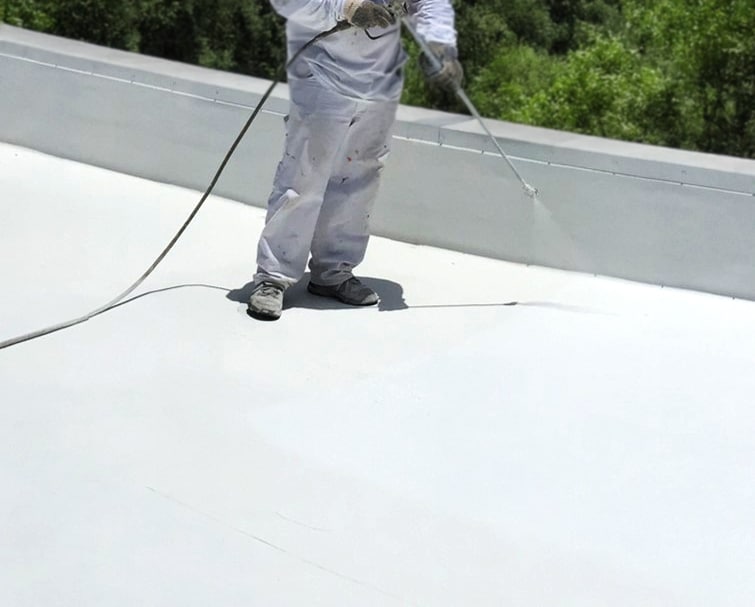
Protect Your Roof’s Integrity
Quickly & Cost-Effectively
What if you could protect your low-slope roof with a durable coating that would extend its useful life while reducing energy costs?
Good news—you can. Elastomeric roof coatings install over metal, modified bitumen, single-ply membrane, and built-up roof (BUR) systems. For many building owners, these coatings are an affordable way to protect the integrity of their low-slope roofs. Our commercial roof coating services use elastomeric technology to protect low-slope roofing systems efficiently.
Elastomeric Roof Coating Benefits
- Roof Protection: Elastomeric roof coatings seal the roof surface, protecting it from rain and wind damage — ideal for commercial roof coating applications. The elastomers resist deterioration from dirt and dust accumulation.
- Energy Efficiency: White is the most common color for elastomeric roof coating because it reduces thermal transfer by reflecting searing-hot sunrays away from the roof. This cool roof reflectivity lets your HVAC unit run less, saving you on utility bills and prolonging the life of the units.
- Coating Cost: Elastomeric roof coatings cost substantially less than replacing the roof entirely. Budget-conscious facility owners can save money while extending the life of their roof 5 to 10 years or more.
- Quick Installation: Elastomeric roof coatings go on quickly, meaning we won’t be hanging around your facility for weeks on end. We’re in. We’re out. You’re set.
- LEED Credits: Cool roofs that contain elastomers can help meet LEED, Energy Star and other energy code requirements. In addition, a cool roof reduces Urban Heat Island Effect so your community will benefit as well.
- Structural Benefits: Elastomeric roof coatings do not add dead weight to the roof, so there is no detrimental effect to your building’s structure.
Why Choose Our Commercial Roof Coating with Elastomeric Technology?
The rubber-like components of elastomeric roof coatings expand when warmed by the summer sun and they return to their original state as they cool down after sunset. This intrinsic “memory” reduces the risk of hardening and cracking, so your roof lasts longer.
Because these coatings reduce energy costs, you might qualify for a business tax incentive. Talk to your accountant to find out if installing elastomeric roof coating qualifies you for an energy rebate. Tax incentives further reduce the facility owner’s expense, making elastomeric roof coating even more economical.
The demand for reflective roof coatings is surging, and North American Roofing is a leader in cool roof technology. We work with all the top roof-coating manufacturers, and we’re committed to helping our customers get the best roof protection possible for their investment dollar.
Call us today at 800.551.5602 to find out if your building could benefit from the installation of elastomeric roof coating.
Commercial Elastomeric Roof Coatings & Restoration
Silicone
Pros
- Ideal solution for humid climates
- Hydrophobic properties actively repel water
- Inorganic – cannot be broken down by UV rays
- Non-porous so algae cannot adhere to coating
Cons
- Super-slick when fully cured – Granules for traction enhancement can be added to uncured coating
Acrylic
Pros
- Optimal for use in dry climates
- Great resistance to radiation and hail damage
- Excellent reflectivity for energy conservation
- Easy to work with and very economical
Cons
- Poor performance in rainy, humid environments due to promotion of algae and mildew growth
Is Your Roof a Good Candidate for a Coating?
Coating is a restoration, not a cure for a failed roof. Before we recommend it, we run an infrared or nuclear moisture survey and adhesion tests. A roof is usually a good fit when:
- The deck and structure are sound, with no sagging or deck failure.
- Wet insulation is limited to small, isolated areas that can be cut out and replaced.
- The membrane is weathered or leaking at seams and penetrations, but still attached.
- Drainage is adequate, or ponding areas can be corrected or handled by a ponding-rated coating such as silicone.
Replacement is usually the better call when insulation is widely saturated, the deck is damaged, the roof already has two roof systems in place, or a large share of the surface needs repair before coating. Not sure which side you fall on? See Re-roof vs. Restore or request a roof assessment.
Our Commercial Roof Coating Process
- Inspect and qualify. Visual inspection, moisture survey, core cuts, and adhesion testing confirm the roof can be restored.
- Repair and replace wet areas. Saturated insulation and failed membrane are cut out and replaced with like material.
- Clean and prime. The surface is power washed, and primer is applied where adhesion tests call for it.
- Detail seams and penetrations. Seams, curbs, drains, and flashings are reinforced with mastic and fabric.
- Apply the coating. Coating goes down at the manufacturer's specified thickness, with wet-mil checks throughout.
- Final inspection and warranty. The system is inspected and registered for the manufacturer warranty, typically 10, 15, or 20 years depending on the system and thickness.
Keep the warranty in force with scheduled inspections through our StarCare™ roof maintenance program.
What Does a Commercial Roof Coating Cost?
A coating typically costs a fraction of a full tear-off and replacement, and it is often treated as a maintenance expense rather than a capital project (confirm treatment with your accountant). Your price depends on:
- Roof size, height, and access
- Existing roof type and condition
- Amount of wet insulation and repair needed before coating
- Coating chemistry (acrylic, silicone, or urethane)
- Thickness required for the warranty term you want
- Seam, flashing, and penetration detail work
- Local labor and safety requirements
Request a quote for pricing based on your building.
Roof Coating FAQs
How long does a commercial roof coating last?
Most elastomeric roof coatings last 10 to 20 years, depending on the coating type, the thickness applied, and maintenance. Many systems can be cleaned and recoated at the end of their term to restart the warranty without tearing off the roof.
Can you coat over a leaking roof?
Yes, if the leaks are repaired first and the roof is structurally sound. Wet insulation must be removed and replaced before coating. A coating sealed over saturated insulation traps moisture and fails early.
Is silicone or acrylic better for a commercial roof?
Silicone is usually better in hot, humid, and rainy climates and on roofs with ponding water because it resists water and UV breakdown. Acrylic is more economical and works well in dry climates, but it does not tolerate ponding water.
Do roof coatings stop leaks?
A properly installed coating creates a seamless waterproof layer that stops leaks at seams, fasteners, and small membrane defects. It is not a fix for structural damage, deck failure, or widespread saturated insulation.
What types of roofs can be coated?
Coatings can be applied over metal, TPO, PVC, EPDM, modified bitumen, built-up (BUR), and spray foam roofs, as long as the surface passes moisture and adhesion testing.
Will a coating lower my energy bills?
White reflective coatings reflect sunlight and reduce roof surface temperature, which lowers heat transfer into the building and reduces HVAC cooling load. Savings are greatest in hot, sunny climates.
Does a roof coating come with a warranty?
Yes. Manufacturer-backed coating systems typically carry 10, 15, or 20-year warranties, with longer terms requiring a thicker application. Warranties usually require periodic inspection and maintenance.
How disruptive is a roof coating installation?
Very little. There is no tear-off, so there is less noise, debris, and risk of interior exposure, and most buildings stay fully operational during the work.
Coat It or Replace It? Get a Straight Answer.
Our team will survey your roof for moisture and adhesion and tell you whether a coating makes sense, before you spend a dollar on the wrong fix.
Talk to a Coating Specialist: (800) 551-5602
Active leak? 24/7 emergency line: (866) 567-2064