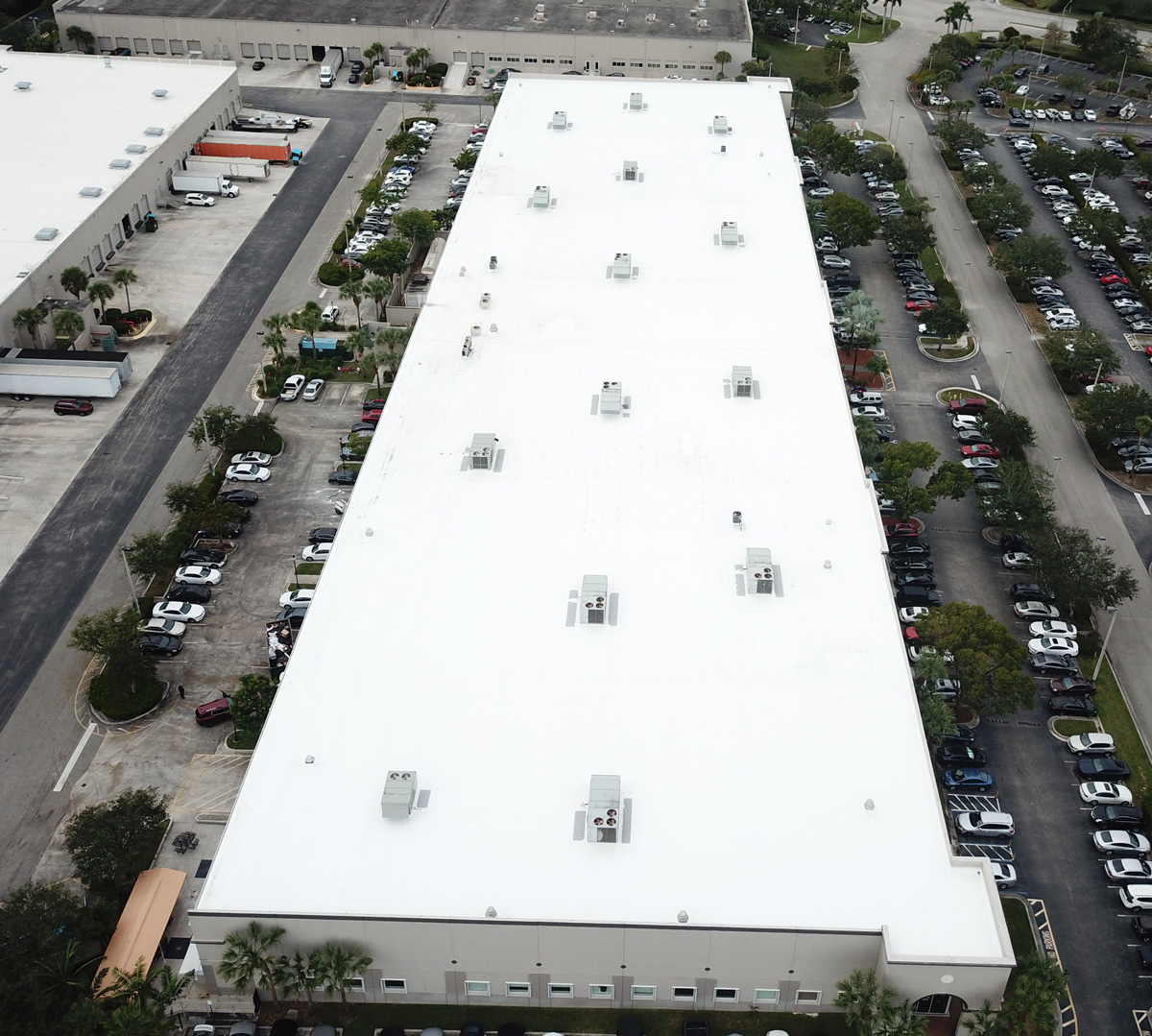
A well-installed TPO roof can protect a commercial building for years. It can also support energy goals, leak prevention, and long-term roof performance.
Many building owners choose tpo roofing for low-slope and flat commercial roofs. The system uses a flexible single-ply membrane that crews weld at the seams.
Before any installation starts, a qualified roofing contractor should inspect the existing roof. That inspection helps define the scope, substrate condition, drainage needs, and attachment method.
What Is TPO Roofing?
If you have asked what is tpo roofing, the answer starts with the membrane. TPO stands for thermoplastic polyolefin.
This roofing system uses a single-ply membrane over insulation or an approved roof substrate. Crews usually install it on commercial, industrial, and low-slope buildings.
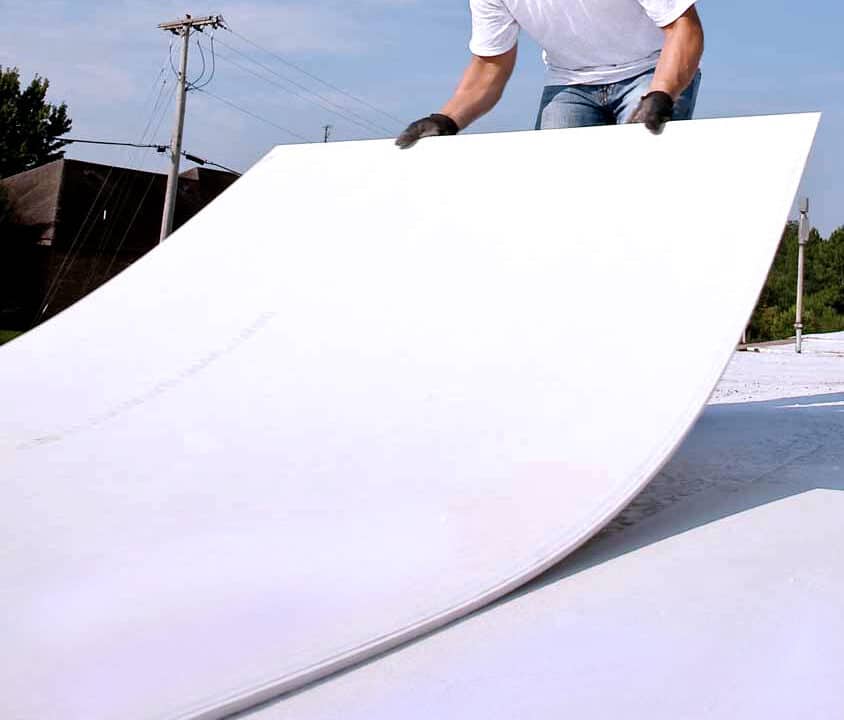
A white thermoplastic tpo membrane roof can help reflect sunlight. That reflectivity can help reduce surface heat on many commercial properties.
Step 1: Roof Inspection and Project Planning
Every successful TPO installation starts with a detailed roof assessment. The contractor checks the deck, insulation, flashing, penetrations, drainage, and existing roof layers.
The crew also reviews building use and roof traffic. That matters for warehouses, offices, retail centers, schools, and industrial facilities.
This step helps determine whether the building needs a tear-off, recover, or repair-first approach. It also helps set the right installation method.
Step 2: Preparing the Roof Surface
The crew must prepare the surface before installing new membrane. They remove loose materials, wet insulation, damaged flashing, and other problem areas.
A clean surface helps the new system perform better. It also helps reduce wrinkles, poor adhesion, and seam problems.
If the roof deck has damage, the contractor should repair it first. A strong roof system needs a stable base.
Step 3: Installing Insulation or Cover Board
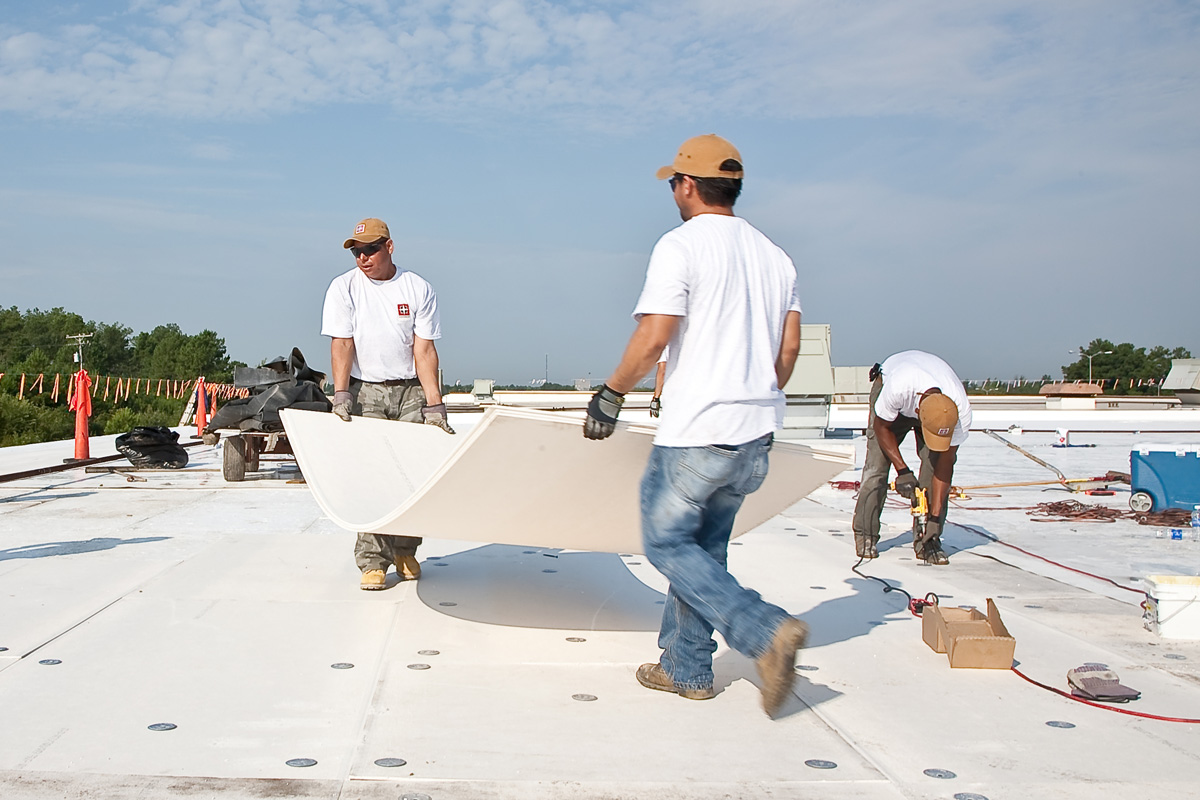
Most TPO systems include insulation or cover board. These layers improve energy performance and create a solid surface for the membrane.
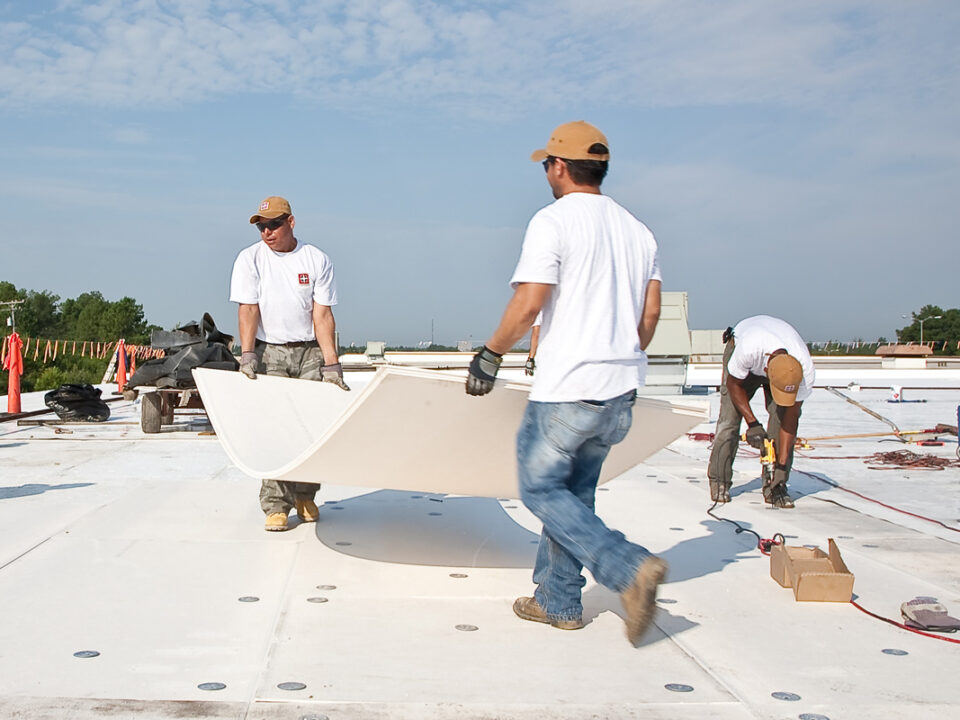
The crew fastens or adheres the boards based on the roof design. They also stagger joints to improve system strength.
Proper insulation layout matters. Gaps, loose boards, and poor fastening can affect the final roof performance.
Step 4: Placing the TPO Membrane
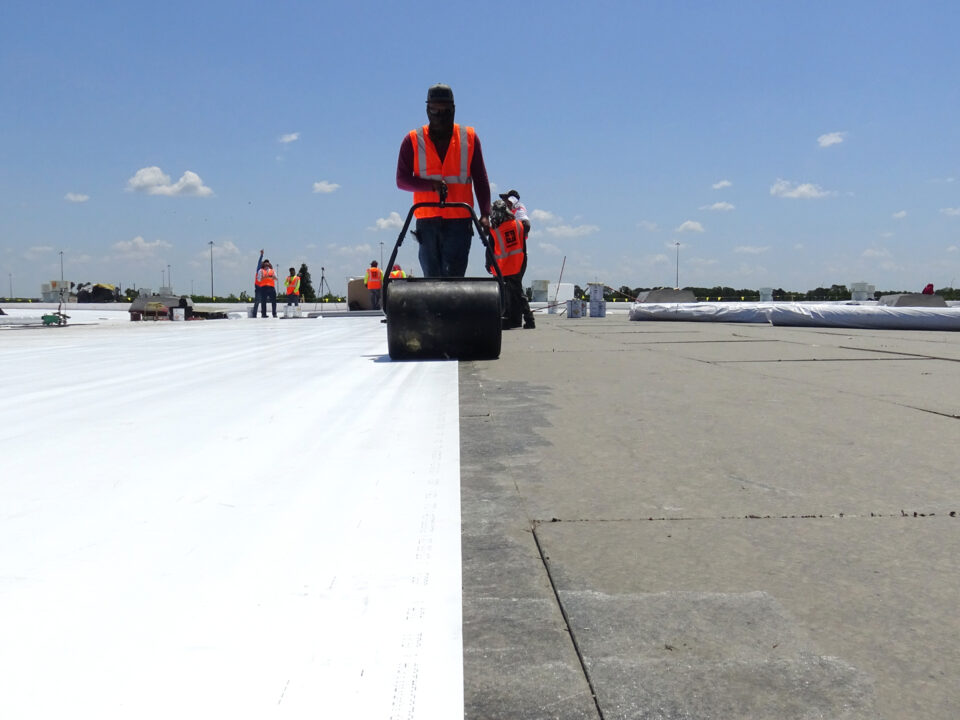
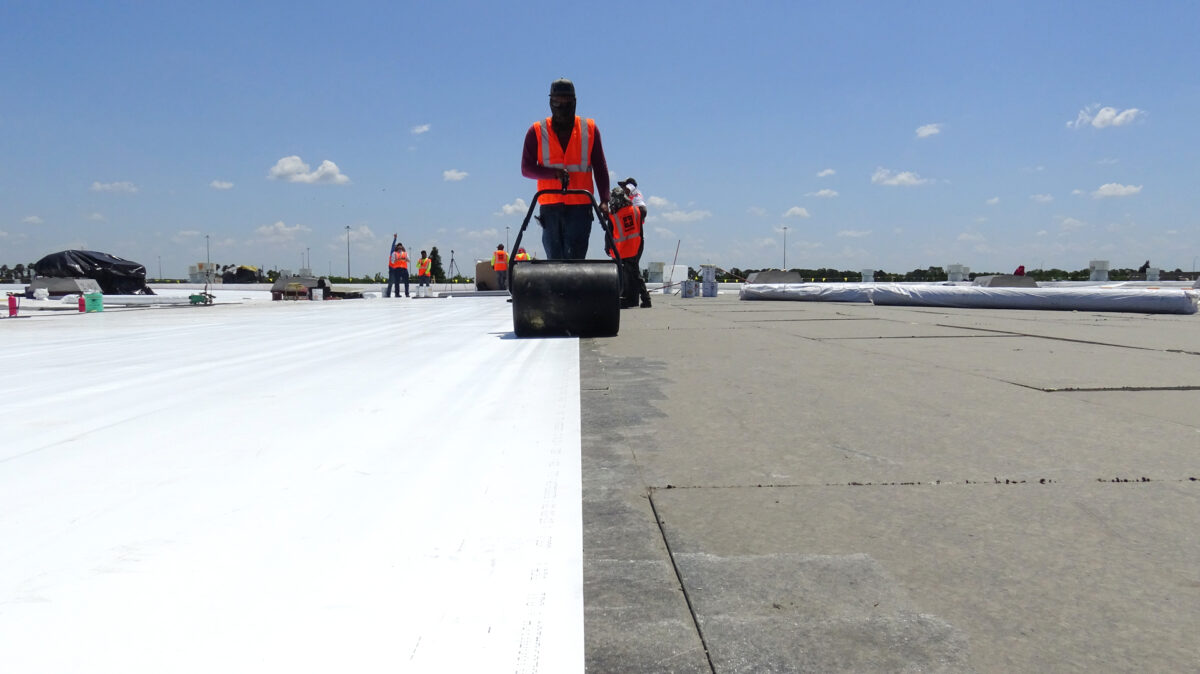
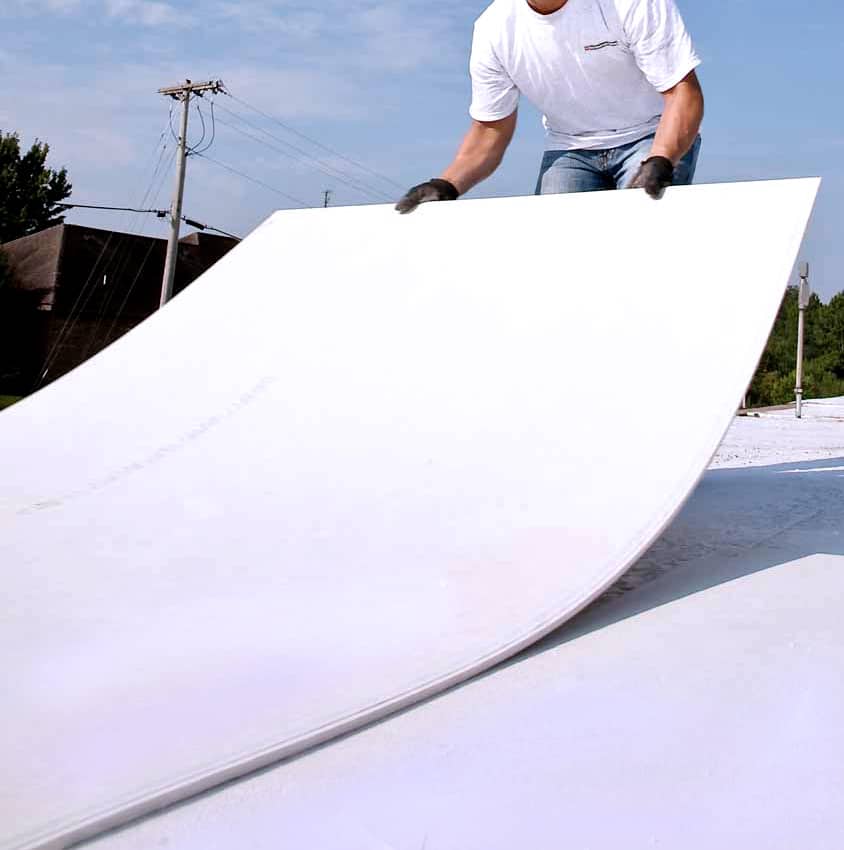
After prep work, the crew rolls out the TPO membrane. They position each sheet to reduce stress and support proper seam layout.
The contractor may use a mechanically attached, fully adhered, or ballasted system. The best choice depends on wind needs, building design, and project goals.
Crews allow the membrane to relax before final attachment. That step helps reduce wrinkles and alignment issues.
Step 5: Welding the Seams
Heat-welded seams help define TPO performance. Crews use hot-air welding equipment to bond overlapping membrane sheets.
The contractor must control speed, temperature, and pressure during welding. Weather, membrane thickness, and job conditions can affect those settings.
After welding, the crew probes the seams. This check helps locate gaps before they become leaks. Proper welding technique matters on every TPO project. For additional manufacturer guidance, GAF offers a helpful overview of TPO membrane installation.
Step 6: Flashing Walls, Curbs, and Penetrations
Roof penetrations need careful detailing. Pipes, drains, HVAC curbs, walls, and skylights all create possible leak points.
The crew installs flashing around these areas. They also weld or seal details based on manufacturer requirements.
Strong detailing protects the most vulnerable areas of the roof. It also helps extend the life of the system.
Step 7: Final Inspection and Quality Review
A final inspection should happen before the job ends. The contractor checks seams, edges, drains, flashings, fasteners, and surface conditions.
Crews should correct open seams, fishmouths, wrinkles, and damaged areas. A small issue can become expensive later.
Building owners should also ask for maintenance guidance. A simple maintenance plan can help protect the investment.
How Long Does a TPO Roof Last?
Many owners ask, how long does a tpo roof last, before approving a project. The answer depends on installation quality, maintenance, climate, foot traffic, and membrane thickness.
A well-installed TPO roof can provide strong long-term performance. Regular inspections help catch small problems before leaks spread.
North American Roofing can evaluate roof conditions and recommend the right approach. That may include repair, recover, replacement, or maintenance.
TPO Roof Advantages
Common tpo roof advantages include energy efficiency, flexible installation options, and heat-welded seams. Many owners also like the bright, reflective surface.
TPO can fit many commercial buildings. It works well for offices, warehouses, retail centers, and industrial facilities.
The system also gives contractors multiple attachment options. That flexibility helps match the roof design to the building.
TPO Roof vs EPDM
The tpo roof vs epdm comparison often starts with material type. TPO uses a thermoplastic membrane, while EPDM uses synthetic rubber.
TPO seams use heat welding. EPDM seams typically use adhesives or tapes.
Owners often compare reflectivity, seam strength, budget, and building conditions. A commercial roofing expert can help choose the better fit.
TPO Roof vs PVC
The tpo roof vs pvc comparison often focuses on performance needs. Both systems use heat-welded seams and single-ply membranes.
PVC can perform well around certain chemicals, grease, or oils. TPO often offers strong value for many standard commercial roofs.
The right choice depends on the facility. Restaurants, factories, warehouses, and offices may each need different roof details.
Why Professional Installation Matters
TPO roofing depends on skilled installation. Even a quality membrane can fail if crews rush prep, welding, or flashing work.
A commercial roof also needs proper drainage. Ponding water can shorten the life of many roofing systems.
North American Roofing installs, repairs, and replaces commercial TPO systems. The team can inspect the roof and recommend the right next step.
Conclusion
The TPO roofing installation process includes inspection, preparation, insulation, membrane placement, seam welding, flashing, and final review. Each step affects performance.
A strong installation can help reduce leaks and protect your building. It can also support energy goals and long-term value.
If your facility needs a TPO roof evaluation, contact North American Roofing. A site visit can help define the best solution. Call (800) 551-5602
FAQ
What is TPO roofing?
TPO roofing uses a thermoplastic polyolefin membrane for flat and low-slope roofs. Many commercial buildings use it for durable roof protection.
How long does a TPO roof last?
A TPO roof can last many years with proper installation and maintenance. Climate, traffic, drainage, and repairs all affect service life.
What are the main TPO roof advantages?
TPO roof advantages include reflective surfaces, heat-welded seams, flexible installation options, and strong commercial roof performance.
Is TPO better than EPDM?
The best choice depends on the building. TPO offers welded seams, while EPDM uses a rubber membrane with taped or adhered seams.
Is TPO better than PVC?
TPO and PVC both work well for commercial roofs. PVC may fit some chemical or grease-heavy environments better.
Can TPO go over an existing roof?
Sometimes, yes. A contractor must inspect the roof, insulation, deck, moisture, and local code requirements first.